

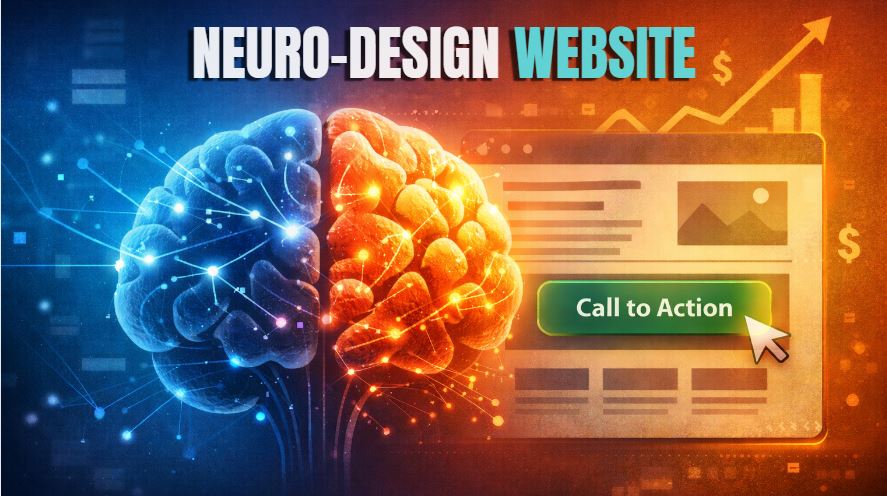
A website can be visually beautiful and still fail to convert. Many businesses learn this the hard way. They invest in design, add content, run ads – and yet visitors leave without taking action. The missing piece is often not better visuals or more information, but better understanding of how people think. This is where neuro design websites make a real difference.
Neuro-design focuses on how the human brain responds to what it sees on a screen. It looks at behavior, attention, emotion, and decision-making. When a website is designed with these things in mind, it feels easier to use. Visitors don’t struggle to understand it.
They move through it naturally – and that’s when conversions start to improve.
What Neuro-Design Actually Is
Neuro-design is not about psychology tricks or forcing people to click buttons. It’s about designing in a way that aligns with how people already think and behave.
When someone lands on a website, their brain immediately starts scanning. It looks for signals: Is this relevant? Is this safe? Is this worth my time? Neuro design websites are built to answer these questions quickly, without overwhelming the visitor.
The layout feels familiar, not confusing. The message is clear before the visitor has to think. Every section serves a specific goal.
Instead of guessing what users want, neuro-design relies on proven patterns – how people read, where their eyes go first, and what makes them feel comfortable enough to stay.
Why Most Websites Struggle to Convert
Most websites don’t fail because the offer is bad. They fail because the experience is tiring.
Long paragraphs, cluttered layouts, unclear buttons, and too many choices force the brain to work harder than it wants to. When that happens, visitors don’t think it through – they leave.
People scan, not read.
They decide in seconds if a page feels safe and easy. If it feels confusing, they move on without noticing why.
The human brain prefers clarity over complexity. It wants guidance, not options. Neuro-design removes unnecessary friction and helps visitors move forward without feeling pushed.
How the Human Brain Behaves Online
People don’t read websites the way they read books. They scan, pause & They scroll. Their attention moves fast.
Within the first few seconds, the brain decides:
- Does this look trustworthy?
- Do I understand what this is about?
- Should I continue or leave?
Neuro design websites respect this reality. They prioritize strong headlines, clear structure, and visual cues that guide attention without noise.
When a website works with the brain instead of against it, visitors stay longer and engage more.
Most of this happens without effort. Visitors are not trying to analyze the design or judge it consciously – they’re simply responding to how easy the experience feels. When information is placed where the brain expects it to be, movement through the page feels natural. There’s no hesitation, no second-guessing, just a smooth sense of “this makes sense,” which is often all it takes to keep someone engaged.
Core Neuro-Design Principles That Influence Action
1. Clear Visual Direction
People need to know where to look first. A strong headline, followed by supporting text, and then a clear call-to-action helps the brain process information in the right order.
2. Fewer Choices, Better Decisions
Too many buttons or offers create hesitation. Neuro-design simplifies choices so the brain doesn’t feel overwhelmed.
3. Emotional Cues Matter
Colors, images, and tone influence how a website feels. Warm visuals can create comfort. Clean layouts can build trust. These emotional signals affect decisions more than most people realize.
4. Familiar Layouts Feel Safe
When navigation and page flow follow familiar patterns, users don’t have to think about how to use the site. Their attention stays on the message.
5. Space Helps the Brain Breathe
White space improves readability and focus. It allows information to sink in instead of competing for attention.
How Neuro-Design Shapes Trust and Comfort
Trust is built before a single word is read. Consistent spacing, readable fonts, balanced layouts, and smooth scrolling all send signals of professionalism.
When a site feels calm and intentional, visitors feel more confident interacting with it. Neuro design websites create this sense of ease by reducing mental effort and uncertainty.
A comfortable user is far more likely to take action than a confused one.
Real-World Impact of Neuro-Design on Conversions
Websites designed with neuro-principles often see improvements in:
- Time spent on page
- Click-through rates
- Form submissions
- Lead quality
Visitors stay longer because the page feels easy to understand. They click more because the next step is clear.
They act faster because nothing feels confusing or forced.
This happens because visitors are not being convinced – they are being guided. The experience feels natural, not sales-driven.
Small changes, like improving content spacing or clarifying one call-to-action, can make a noticeable difference when aligned with brain behavior.
Final Takeaway
Website conversion is not just about better copy or stronger offers. It’s about creating an experience that feels easy, familiar, and trustworthy. When design supports how people think, action follows naturally.
Brands that invest in neuro design websites build stronger connections with their audience and see more consistent results over time. For businesses looking to apply these principles thoughtfully, Virtual Oplossing helps create websites designed around human behavior – not guesswork.
FAQs
1. What are neuro design websites?
They are websites designed using principles based on how the human brain processes information and makes decisions.
2. Can neuro-design improve conversion rates?
Yes. By reducing confusion and mental effort, visitors are more likely to engage and take action.
3. Is neuro-design suitable for all industries?
Yes. It works for service businesses, e-commerce, SaaS, and informational websites.
4. Does neuro-design mean minimal design only?
No. It means intentional design where every element serves a purpose.5. Can existing websites apply neuro-design principles?
Absolutely. Even small design and layout improvements can lead to better results.