

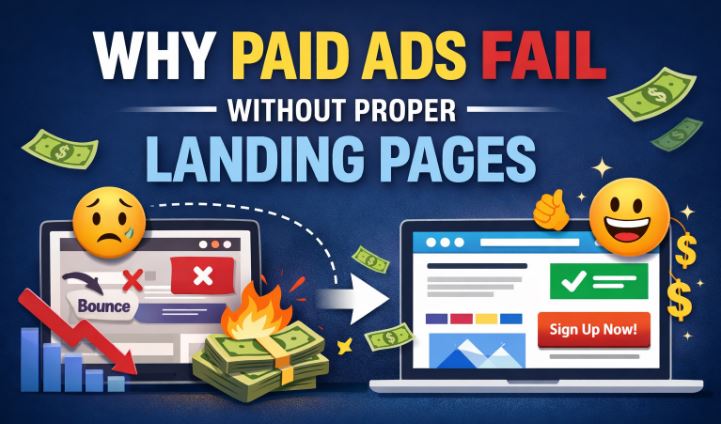
Running paid ads sounds simple. You create an ad, spend money, and expect people to buy or sign up. But in reality, many ads fail even after getting clicks. One big reason is poor landing page optimization. If your landing page is confusing, slow, or unclear, people leave without taking action, and your ad money goes to waste.
This is frustrating for businesses because they are paying for every click but getting little or no return. Visitors arrive on the page, look around for a few seconds, and then leave without filling a form or making a purchase. When this keeps happening, ad costs increase while results stay low.
In this blog, we’ll explain why paid ads often fail, how landing pages affect results, and what you can do to fix it. No complicated terms, just clear explanations that make sense.
What Is a Landing Page?
A landing page is the page people reach after clicking on your ad.
It is not your homepage.
It is not a random service page.
A landing page is made for one clear purpose, such as:
- Filling a form
- Booking a call
- Buying a product
- Signing up for something
If the page does not guide visitors clearly, they leave within seconds.
Why Paid Ads Need Strong Landing Pages
Paid ads bring people to your website, but landing pages decide what happens next.
Think of it like this:
- Ads bring people to the door
- Landing pages invite them inside
Without proper landing page optimization, visitors feel lost, confused, or unsure, and they exit without doing anything.
This leads to:
- Low conversions
- High ad costs
- Poor results
Where Things Go Wrong After the Click
Many businesses focus only on ads and forget the page behind them.
Common problems include:
- The page doesn’t match the ad message
- Too much text and no clear action
- Slow loading time
- Confusing design
- No trust signals
When people don’t instantly understand what to do, they leave.
Common Landing Page Mistakes
Here are some simple but costly mistakes:
Too many options
People don’t know where to click.
Unclear headline
Visitors don’t understand the offer.
Long forms
People don’t want to fill 10 fields.
No benefits explained
They don’t know what’s in it for them.
No mobile-friendly design
Most users are on phones.
These mistakes hurt conversions badly.
How Landing Page Optimization Helps
Landing page optimization means improving the page so more visitors take action.
This includes:
- Clear headlines
- Simple layouts
- One strong call-to-action
- Fast loading speed
- Mobile-friendly design
With good landing page optimization, the same ad traffic can bring better results without increasing ad spend.
Optimizing your landing page makes it easier for visitors to understand what you want them to do. When everything is clear and easy to use, more people complete the action, whether it’s filling a form, signing up, or making a purchase. This means you get better results from the same number of visitors without spending extra on ads.
The Connection Between Ads and Landing Pages
Your ad and landing page must work together.
If your ad promises:
- A free consultation
- A discount
- A solution to a problem
Then the landing page must show the same message clearly.
When there is a mismatch, users feel confused and leave immediately. Visitors expect the page to deliver exactly what the ad promised. If they don’t see it right away, they lose trust and leave. A landing page that matches the ad keeps people engaged and increases the chances they will take action.
Why Good Ads Alone Are Not Enough
Even the best ads fail if the landing page is weak.
You might get:
- Many clicks
- High traffic
- Zero leads
That’s because ads only attract attention. Landing pages convert attention into action.
Without proper landing page optimization, paid ads cannot perform well.
Many businesses spend a lot on creating catchy ads but forget that the real work happens after the click. A visitor might be interested, but if the page is confusing or doesn’t clearly show what to do next, all that interest is wasted. That’s why a strong landing page is just as important as a great ad.
Simple Ways to Improve Your Landing Page
You don’t need anything complex. Start with these basics:
- Keep one clear goal
- Use simple words
- Highlight key benefits
- Add trust elements like reviews or logos
- Make the call-to-action visible
- Remove unnecessary links
Small changes can create big improvements. When visitors land on your page, they should understand the offer within a few seconds. A clean layout and clear message help them feel confident and comfortable.
When the page feels easy to use, people are more likely to stay and take action.
Final Takeaway
Paid ads fail not because ads are bad, but because landing pages are weak.
A strong landing page:
- Builds trust
- Guides visitors
- Improves conversions
Saves ad money
With proper landing page optimization, paid ads become more effective and predictable.
And yes, Virtual Oplossing helps with landing pages and optimization too.
When the landing page is clear and well-designed, visitors know exactly what to do next. This reduces drop-offs, improves results from the same ad budget, and helps businesses see real value from their paid campaigns instead of asking what went wrong.
FAQs
1. What is landing page optimization?
It means improving a landing page so more visitors take action, like filling a form or making a purchase.
2. Can paid ads work without a landing page?
They can, but results are usually poor. Landing pages improve focus and conversions.
3. How many landing pages should I have?
Ideally, one landing page for each offer or ad campaign.
4. Do landing pages need to be long?
No. They should be clear, focused, and only as long as needed.
5. How quickly can results improve after optimization?
Many businesses see improvements within a few weeks after fixing landing page issues.